
Alternatives
Gumroad alternatives (2026): 9 platforms compared
Compare nine Gumroad alternatives on fees, payouts, courses, subscriptions, and tax handling. See current prices and what to check before switching.

Gumroad alternatives (2026): 9 platforms compared
Gumroad alternatives appeal to sellers concerned about fees, payout delays, and support, issues raised in Gumroad's Trustpilot reviews. Start with Payhip for downloads, Podia for courses, and Lemon Squeezy for software with merchant-of-record tax handling. These platforms can reduce selling fees, but subscriptions, processing, and tax administration change the total cost.
By Seph Fontane Pennock. Published 8 October 2026, updated 10 October 2026.
Why people look for a Gumroad alternative
Fees need more than a headline comparison. On Trustpilot on 5 July 2026, Julien Tomezach wrote, "Which is much higher than their competitors," referring to fees. That is one customer's view; the comparison below uses Gumroad's own fee documentation. Review source, accessed 8 October 2026.
Payout timing can affect your operating budget. On Trustpilot on 11 September 2026, C Morris wrote, "they only say it is under review with no explanation." The review describes an unpaid sale, not evidence that every seller experiences delays. It does make payout custody a useful selection criterion. Review source, accessed 8 October 2026.
Support matters when a payment is missing. Both the payout complaint and other reviews describe difficulty resolving problems. Before migrating, test the destination's support with your actual product type, business country, and subscription setup. A cheaper checkout is little help if nobody can explain how your customers will retain access.
The service bundled into the fee may still be useful. Gumroad acts as merchant of record and handles sales-tax collection and remittance for its sales. Replacing that arrangement with your own payment account changes the work you must arrange, since tax calculation, tax reporting, and tax remittance are separate capabilities. Gumroad pricing, checked 10 October 2026.
| Gumroad baseline | Published charge |
|---|---|
| Monthly platform subscription | None |
| Standard direct sale | 10% + $0.50, plus processing |
| Credit-card processing listed in help center | 2.9% + $0.30 |
| Discover marketplace sale | 30%, including processing |
| Direct sales after paid monthly sales reach $20,000 | 5% + $0.50 on new direct sales that month, plus processing |
Prices taken from gumroad.com/pricing and Gumroad's fee help article on 10 October 2026. The volume discount resets monthly; it is not a retroactive discount on earlier sales.
The best Gumroad alternatives at a glance
These nine options cover downloads, teaching, memberships, and dedicated checkout software. Several offer lower standard platform charges or lower base selling fees than Gumroad, subject to the conditions shown. A paid plan can still cost more overall when sales are low.
Monthly equivalents below use annual billing where available. Free plans require no annual commitment. Processing is additional unless explicitly included. Features shown may require a higher plan than the starting price.
| Tool | Best for | Price from, annual equivalent | Platform transaction fee | Custody of funds | Upsells and bumps | Affiliates | Subscriptions | Course hosting | EU VAT / main limitation |
|---|---|---|---|---|---|---|---|---|---|
| Payhip | Downloads and small course catalogs | $0/month | Free 5%; Plus 2%; Pro 0% | Your connected processor | Checkout cross-sells | Yes; you pay partners | Yes | Yes | Collects/remits EU and UK digital VAT; not global MoR |
| Lemon Squeezy | Software and international downloads | $0/month | Base 5% + $0.50, processing included; extras apply | Platform pays you out | Bundles/upsells advertised; verify flow | Yes; additional fee | Yes | File delivery, not a learning platform | MoR; payout and payment surcharges |
| Sellfy | Downloads plus merchandise | $22/month | 0% within plan limits; overage possible | Your Stripe/PayPal | Upselling on Business+ | Business+ | Yes | File/video delivery | Tax settings; seller remits; sales caps |
| Podia | Courses and community | $42/month | Mover 5%; Shaker/Earthquaker 0% | Your Stripe/PayPal, plan dependent | Upsells on Shaker+ | Shaker+ | Yes | Yes | Collects, does not remit; email limits |
| Ko-fi | Supporter memberships and commissions | $0/month | Shop/memberships 5%; Gold 0% | Your Stripe/PayPal | No native funnel verified | No seller affiliate system verified | Memberships | Posts/files, not a learning platform | Manual tax rates; seller remits |
| Shopify | A mixed physical/digital store | $29/month, US Basic | No third-party surcharge with Shopify Payments; Basic external-provider fee 2% | Shopify Payments payouts or your provider | Apps; checkout restrictions apply | Apps | App required | App required | EU digital VAT tools; seller responsibilities remain |
| SendOwl | Protected files on an existing site | $32.50/month | 0%; bandwidth overages possible | Your Stripe/PayPal | Upsells/cross-sells | Yes | Yes | Dripped course delivery | Calculates/reports; does not remit; usage limits |
| Kajabi | An established teaching business | $143/month | 0% revenue share; Basic external-provider fee 2% where applicable | Kajabi Payments payouts or your provider | Yes | Growth/Pro | Yes | Yes | Check tax coverage for your setup; high fixed cost |
| Plug&Pay | EU checkouts and sales funnels | €15/month billed annually (€25 monthly) | No platform fee; Mollie or Stripe processing fees | Your Stripe/Mollie | Lite bumps; Premium+ upsells | Ultimate | Premium+ | No | Native EU VAT tools; no US sales tax; hosted checkout only |
Prices taken from payhip.com/pricing, lemonsqueezy.com/pricing, sellfy.com/pricing, podia.com/pricing, ko-fi.com/pricing, shopify.com/pricing, sendowl.com/pricing, kajabi.com/pricing, and plugandpay.com/pricing on 10 October 2026, except Ko-fi's figures, last directly fetched 8 October 2026. Shopify figures use the US pricing result. Sellfy's price reflects today's live pricing page, which now differs from its help-center article (last revised 22 July 2026); detailed fee qualifications appear below.
How we checked: vendor pricing and help articles, re-verified 10 October 2026; two Trustpilot reviews accessed 8 October 2026. This is a documentation comparison, not a hands-on test. Plug&Pay publishes this article and is one of the products compared.
1. Payhip: a Gumroad alternative for digital downloads
Best for: creators selling ebooks, templates, downloads, and courses who want to start without a fixed platform bill. Payhip combines a storefront with course delivery and checkout cross-selling, making it a relatively direct replacement for a small Gumroad catalog.
Pricing: Free Forever has no monthly charge and takes 5%; Plus costs $29/month plus 2%; Pro costs $99/month with no platform transaction fee. All three retain processor charges. There is no expiring trial to navigate on Free Forever, and the pricing page permits cancellation at any time. Pricing checked 10 October 2026.
What it does better: it reduces the standard platform percentage while keeping digital-product delivery. Checkout cross-sells can offer a related product during purchase.
Watch out for: Payhip's EU and UK VAT handling is not worldwide merchant-of-record coverage. Its affiliate system tracks commissions, but you must pay affiliates yourself. Skip it if global tax remittance and automated partner payouts are essential; deleting your account also permanently removes your content, according to its account-deletion guide.
2. Lemon Squeezy: merchant-of-record selling for software
Best for: software, license keys, and downloads where tax remittance is a reason to stay with Gumroad. Lemon Squeezy offers recurring billing and merchant-of-record handling alongside digital delivery, so the comparison preserves more of Gumroad's service bundle.
Pricing: no monthly ecommerce subscription; the base fee is 5% + $0.50, including processing. Its fee documentation adds 1.5% for international transactions, 1.5% for PayPal, and 0.5% for subscriptions; merchant affiliate referrals add 3%. Payout fees can also apply. Pricing and fee schedule, checked 10 October 2026.
What it does better: license management is a useful fit for paid software, and the base selling charge is lower than Gumroad's standard direct-sale charge. It is free to start without a timed ecommerce trial.
Watch out for: multiple surcharges can narrow the saving, and payment proceeds still pass through the platform. Skip it for a course business that needs lesson progress and assessments inside the same product. Store deactivation requires contacting support under its account instructions; arrange ongoing customer access before closing.
3. Sellfy: downloads and merchandise in one store
Best for: creators selling digital files alongside physical products or print-on-demand merchandise. That broader catalog is its main advantage over using a checkout built around downloads alone.
Pricing: Starter costs $29/month billed monthly, or $22/month billed annually. That is lower than the $39/$29 figures in Sellfy's help center, which has not been updated since 22 July 2026; the live pricing page governs here. Pricing page, checked 10 October 2026.
What it does better: Sellfy charges no platform commission within plan limits and sends payments to your connected Stripe or PayPal account. Its 14-day trial supports setup and testing; live selling requires a paid plan.
Watch out for: Starter has a $10,000 annual sales limit, while upsells and affiliates require Business or above. Exceeding limits without upgrading can trigger a 2% overage charge. Skip it if you want predictable costs independent of revenue. Cancellation takes effect at the billing-cycle end. Billing terms and fees, checked 10 October 2026.
4. Podia: courses, community, and a website
Best for: instructors moving beyond file delivery into an organized course business. Podia brings lessons, community, downloads, coaching, and a website together, which can remove the need to assemble separate delivery tools.
Pricing: annual billing makes Mover $42/month with a 5% platform fee, Shaker $84/month with no platform fee, and Earthquaker $150/month with no platform fee. Payment processing remains additional. The trial lasts 14 days and requires no card. Pricing checked 10 October 2026.
What it does better: the course and community experience is the reason to migrate, especially when students need somewhere to return after buying. Shaker adds upsells and affiliate marketing, so compare that tier if those features drive your sales.
Watch out for: included email subscribers and product capacity vary by plan. Podia also collects tax without remitting it. Skip it if you only need occasional file sales. Cancel through Billing, but plan the exit carefully: completed cancellation removes customer access and stops recurring subscriptions. Refund requests have a 72-hour window after a charge.
5. Ko-fi: supporter memberships and small shops
Best for: artists, streamers, and creators whose audience wants to support them, commission work, or buy an occasional download. Ko-fi centers that relationship around a creator page rather than a detailed sales funnel.
Pricing: the free account charges a 5% service fee on shop sales, memberships, and commissions. Gold is advertised at $12/month with no service fee; payment processing remains additional. Start on the free account instead of a timed trial. Pricing checked 8 October 2026.
What it does better: supporters pay into your connected Stripe or PayPal account. That avoids a separate Ko-fi payout queue, although the payment provider still controls settlement. Memberships and commission requests also suit creators whose work does not fit a fixed download catalog.
Watch out for: Ko-fi requires you to set and remit applicable tax. We found no native seller affiliate system or full upsell funnel in the reviewed feature documentation. Skip it for structured teaching or complex checkout sequences. Canceling Gold stops renewal while retaining benefits until the paid period ends.
6. Shopify: a store that also sells digital products
Best for: an established brand combining downloads with stocked products, shipping, and retail operations. Shopify earns its place through store management and its app ecosystem, rather than being the smallest possible replacement for Gumroad.
Pricing: US Basic is $29/month billed annually or $39 month to month. Using Shopify Payments avoids the third-party transaction surcharge; Basic otherwise lists a 2% external-provider charge, subject to exemptions. Payment processing is separate. A three-day trial is advertised. US pricing checked 10 October 2026.
What it does better: you can manage a broader retail business from the same store. Shopify documents apps for digital delivery and subscriptions, plus EU digital VAT settings.
Watch out for: apps can introduce extra subscriptions, and course delivery needs an additional application. Checkout customization also depends on plan and extension support. Skip it if your entire business is a small download catalog. Cancel through Settings > Plan; review domains and outstanding app charges as part of deactivation.
7. SendOwl: protected delivery on your existing website
Best for: sellers who like their current website but need checkout, subscriptions, and controlled file delivery. SendOwl offers PDF stamping, download limits, and dripped content without requiring a complete website migration.
Pricing: Launch costs $39/month or $32.50/month with annual billing. It includes 5,000 orders and $10,000 in sales per trailing year, plus 10 GB monthly bandwidth. There is no platform commission; standard bandwidth overages cost $1 per GB. Pricing and fee documentation, checked 10 October 2026.
What it does better: delivery controls, upsells, and affiliates are available across current plans. Its checkout can work within an existing site, reducing the amount of storefront work you must redo.
Watch out for: hitting volume limits triggers a higher plan, and large downloads can increase bandwidth costs. Skip it if you want tax remittance included: SendOwl calculates and reports tax but does not pay it. The seven-day trial requires a card; account closure eventually disables existing download links.
8. Kajabi: an established course business under one roof
Best for: course creators replacing several paid tools at once. Kajabi combines teaching, community, email, a website, and sales funnels, so its value depends on how much of that software you actually use.
Pricing: Basic costs $143/month billed annually or $179 monthly. Kajabi has no platform revenue share, but Basic adds 2% for eligible third-party processing where Kajabi Payments is available; PayPal is exempt. Processing still applies, including an additional 0.7% for US Kajabi Payments subscription transactions. Pricing and US fees, checked 10 October 2026.
What it does better: it gives teaching businesses a broader operating system than a download checkout. Our Kajabi pricing breakdown explains the plan limits and additional costs.
Watch out for: the fixed bill is substantial for occasional sales, and affiliates require Growth or Pro. Skip it if a storefront is all you need. The trial lasts 14 days; cancel before renewal and handle customer subscriptions separately when leaving.
9. Plug&Pay: Checkout funnels with native EU VAT tools
Best for: coaches and EU sellers who already have somewhere to deliver their content. Plug&Pay adds no transaction fee of its own; you pay the subscription and your payment provider's processing fees (Mollie or Stripe). Lite includes order bumps, Premium adds one-click upsells and subscriptions, and Ultimate adds affiliates.
Pricing: prices exclude VAT, and a 14-day free trial applies before the first debit.
| Plan | Monthly | Billed annually, per month | Annual total |
|---|---|---|---|
| Lite | €25 | €15 | €180 |
| Premium | €69 | €59 | €708 |
| Ultimate | €149 | €119 | €1,428 |
Prices taken from plugandpay.com/pricing on 10 October 2026.
What it does better: dedicated funnel controls and EU VAT settings, including buyer-country rates and VAT-ID validation, suit sellers managing their own payment relationship.
Watch out for: there is no built-in course hosting or US sales-tax calculation, and checkouts are hosted rather than embedded. Wallet support depends on Mollie; do not assume the Stripe integration exposes the same methods. Skip it if you need merchant-of-record tax remittance. The platform trial lasts 14 days; paid plans renew monthly or annually according to the selected term. Payment-provider details.
How Gumroad competitors change your total costs
Compare the cost of your actual sales mix: platform subscription, transaction charges, payment processing, required apps, and tax administration. Separate direct sales from marketplace sales, and include the plan that supplies your required features. Our checkout software comparison examines that narrower category if you already have content delivery covered.

Payhip provides a useful example because its plans share features. The upgrade decision is primarily arithmetic rather than a feature comparison.
| Payhip upgrade | Extra monthly subscription | Platform-fee reduction | Monthly sales where the difference breaks even |
|---|---|---|---|
| Free to Plus | $29 | 3 percentage points | About $966.67 |
| Plus to Pro | $70 | 2 percentage points | $3,500 |
Prices taken from payhip.com/pricing on 10 October 2026. Break-even figures are our calculations: subscription difference divided by fee-rate difference. They exclude taxes, refunds, and payment processing, assumed unchanged between these Payhip plans.
Apply the same approach to your shortlist. For Gumroad, include its volume discount before projecting large savings. For platforms that leave tax remittance to you, include the tools or accounting work your business will need. A smaller transaction percentage is only one part of the decision.
How to switch from Gumroad without losing customers
Treat customer access and recurring billing as separate migration jobs. Moving a sales CSV does not move card details, subscription schedules, product files, or every customer's login.
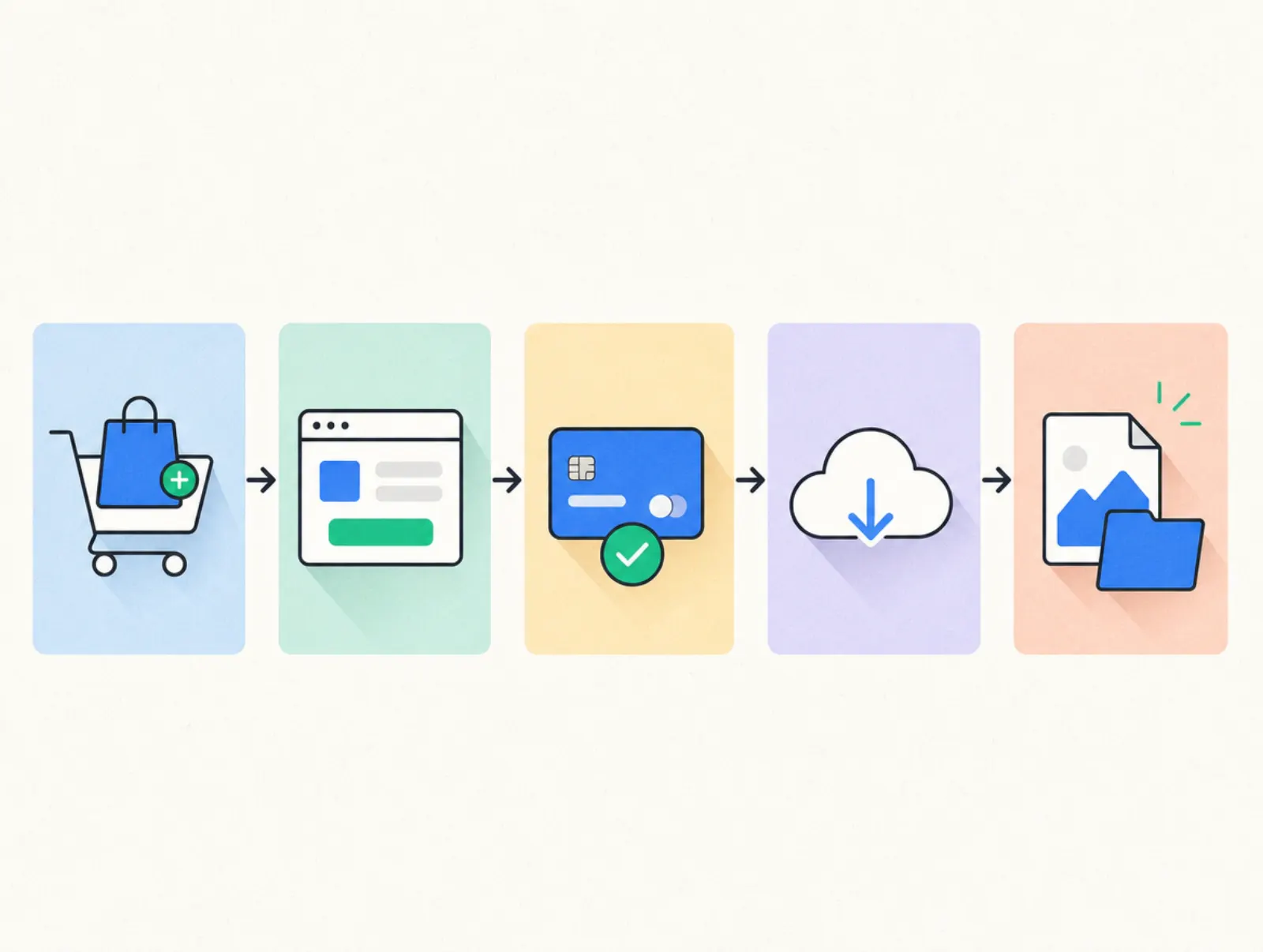
- Export customers and document products. Download the Gumroad sales CSV, including historical purchases. Back up original files, descriptions, license information, and product-to-customer mappings separately. Record who bought lifetime access and who has an active subscription.
- Rebuild and test checkouts. Match products, delivery emails, discounts, tax settings, and refund instructions. Test purchase, download, cancellation, and access recovery with a small group before changing your public links. Keep a mapping of old product identifiers to new ones.
- Plan subscription continuity. Lemon Squeezy's Gumroad migration guide says there is no direct subscription migration path and recommends customers resubscribe at their next billing cycle. Saved payment methods already in your own Stripe account remain there when you change frontends, but that does not guarantee the new software can adopt existing subscriptions. Obtain a supported migration plan before canceling anything.
- Update links you control. Replace checkout links in your website, emails, social profiles, and partner materials. Redirect URLs on your own domain where possible. Do not assume you can add server redirects to Gumroad-owned product URLs; preserve a clear route for existing buyers to get help.
- Run both systems for a month. Route new sales to the replacement while monitoring legacy renewals and access. Reconcile customers individually to prevent double billing. Annual subscribers may need a longer transition, so close the old setup only after their access and renewal arrangements are accounted for.
Which alternative should you pick?
Pick the platform that replaces the parts of Gumroad you actually use. Start with your product type and tax arrangement, then compare the correct plan at your sales volume. The best Gumroad alternative for a download seller may be a poor fit for a coach with recurring clients.

- Digital downloads: compare Payhip with SendOwl if you already have a website.
- Course sellers: compare Podia with Kajabi when teaching, community, and email need to work together.
- Coaches: compare Plug&Pay's checkout tools with Podia's delivery features.
- Agencies: evaluate Shopify for mixed retail catalogs and SendOwl for adding digital sales to existing client sites.
- EU sellers: compare Plug&Pay's VAT tools with Payhip's digital VAT remittance; evaluate Lemon Squeezy if merchant-of-record coverage is central.
Related reading
- Gumroad discount code, fees and pricing (2026)
- Sell digital products online: the complete guide
- Where to sell digital products: 12 platforms compared
- Stan Store pricing (2026): plans, fees and real costs
FAQ
Is there a free alternative to Gumroad?
Payhip and Ko-fi let you start without a monthly subscription, but paid sales still attract platform and processor charges. Lemon Squeezy also has no monthly ecommerce subscription, with selling fees instead. Free to start does not mean free to sell; the dated comparison table shows the distinction.
Which Gumroad alternative is cheapest?
It depends on sales volume, order value, payment method, and required features. Compare the total annual bill, including paid plans and tax administration, rather than choosing the smallest headline percentage. The Payhip calculation above shows how a free plan can become more expensive as sales grow.
Which alternatives to Gumroad have no transaction fees?
Payhip Pro, Podia Shaker and Earthquaker, and current SendOwl plans charge no platform transaction commission. Sellfy does too within its plan limits, while Shopify and Kajabi require attention to payment-provider surcharges. Processing, subscriptions, and applicable usage charges remain payable, as detailed in the dated tables.
What is the best Gumroad alternative for courses?
Podia fits creators wanting courses and community without assembling separate tools; Kajabi fits businesses that will also use its website, email, and funnels. Payhip is another option for a smaller catalog. Compare the full plan costs before treating an integrated platform as a fee-saving purchase.
Can I migrate Gumroad subscriptions without asking customers to pay again?
Do not assume so: Lemon Squeezy's migration documentation explicitly recommends canceling and restarting subscriptions at the next billing cycle. Exporting customer records does not transfer payment credentials. Confirm a supported route with the destination and retain existing access until replacement billing is arranged.
Is Gumroad still worth it?
It can be if you value a quick setup, no fixed monthly platform bill, and merchant-of-record tax handling. Marketplace discovery may also be useful when it brings customers you would not otherwise reach. Compare those benefits with the current direct-sale, Discover, and volume-discount terms, checked 10 October 2026.