
Guides
Recurring billing platform: 8 options compared (2026)
Compare eight recurring billing platforms for memberships and digital products, with current prices, payment fees, trial terms, tax handling, and key limits.
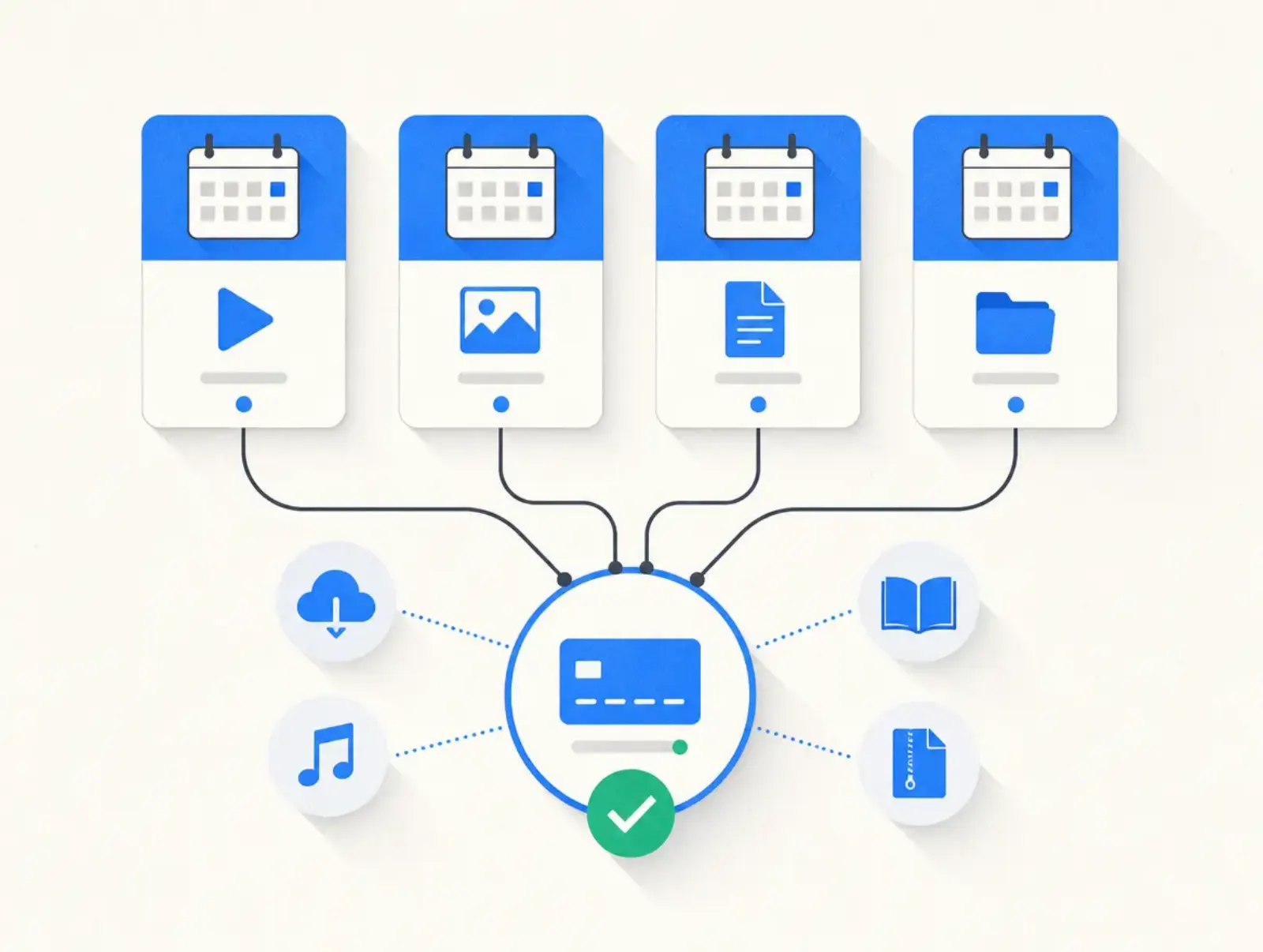
Recurring billing platform: 8 options compared (2026)
The right recurring billing platform depends on what happens after payment. Shortlist Payhip for a small membership, Kajabi for courses plus marketing, and Stripe Billing for an existing website with its own delivery system. This comparison judges eight tools on price, fees, payment custody, subscription controls, and product delivery, prices checked 10 October 2026. We cover fixed subscriptions for memberships and digital products, not metered SaaS billing.
By Seph Fontane Pennock. Published 8 October 2026. Updated 10 October 2026.
How to choose recurring billing software
What renews? A subscription continues until cancellation; an installment plan ends after an agreed number of payments. Define your billing interval, access period, and cancellation policy before comparing recurring billing solutions. A recurring invoice that customers must pay manually is also different from an authorized automatic charge.
Where do members get access? A recurring payment system collects money, but a membership subscription platform must also deliver content and remove access when appropriate. Decide whether you need hosted courses and community, or payment events sent to an existing site. Our checkout software comparison covers the wider checkout decision.
What is the complete fee? Compare the software subscription, platform percentage, processor charge, recurring-billing surcharge, and optional tax tools. Calculate these against your expected renewal revenue and transaction count. The cheapest subscription software for small business at launch may cost more once monthly sales grow.
Who handles funds and transaction taxes? Connecting your own processor differs from using a merchant of record that sells to customers and pays you afterward. Tax calculation, collection, and remittance are separate responsibilities. Ask who owns each step and which payout schedule applies to your country.
What happens when payment fails? Automated recurring billing software should make failed payments visible and support an appropriate recovery process. Test the reminder, payment-method update, and access-removal sequence. A successful first checkout tells you little about what happens after an expired card or canceled mandate.
How do customers and sellers leave? Check customer cancellation separately from canceling your software account. Ask whether members keep access through their paid period, whether billing stops automatically, and whether payment credentials can migrate. Exporting email addresses alone does not transfer authorization to charge customers elsewhere.
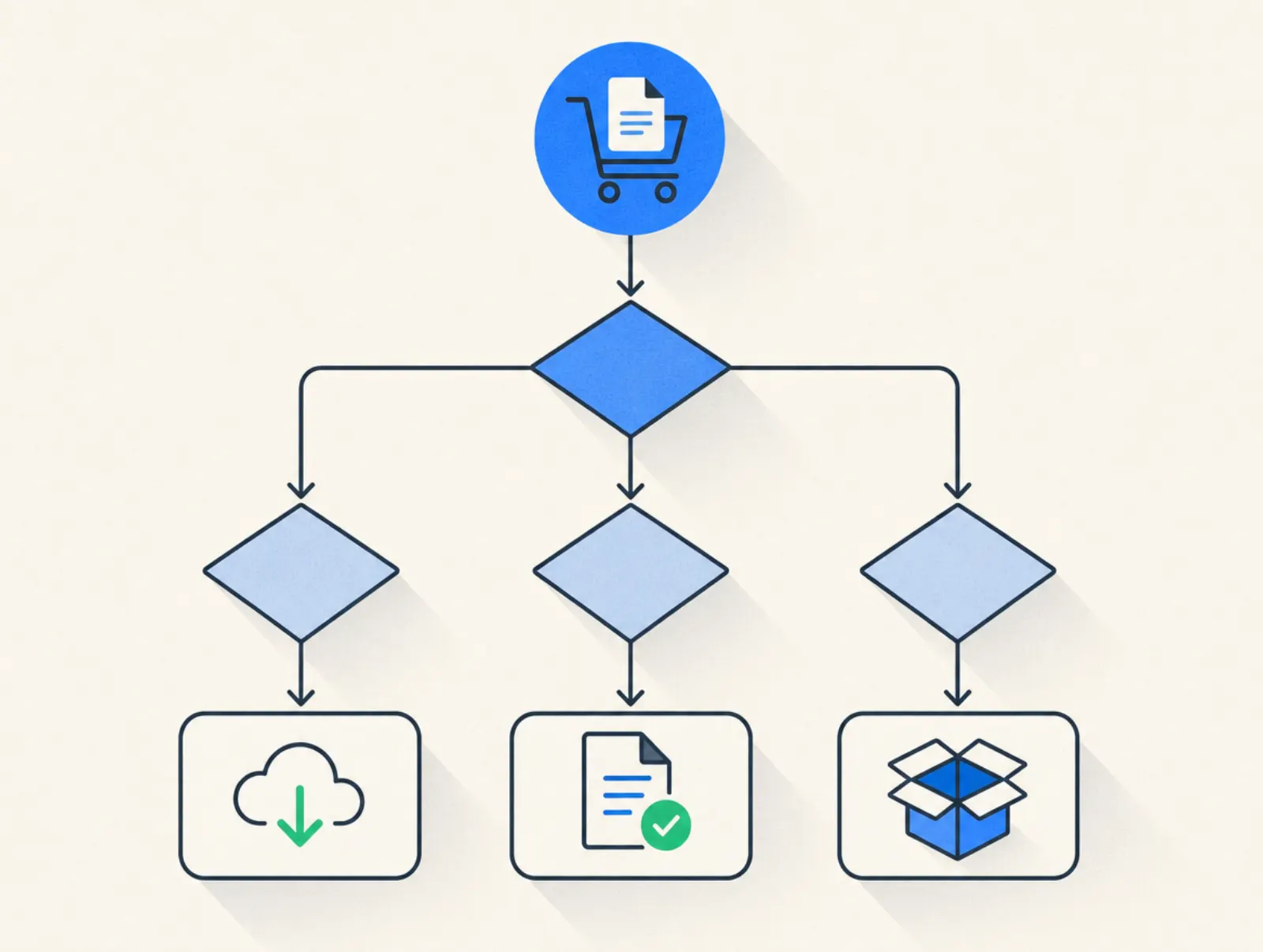
The best recurring billing platform tools at a glance
These are editorial picks by use case, based on public documentation, not hands-on benchmark scores. Annual prices are monthly equivalents where offered; usage plans have no annual commitment. Fees below exclude taxes on your software purchase and optional services unless stated. Payment methods refer to recurring purchases, not every logo on a vendor's checkout page.
| Tool | Best for | Price from, annual basis | Platform or billing fee | Content hosting | Seller trial or free access | Cancellation control | Funds route | EU VAT | Recurring payment methods | Main limitation |
|---|---|---|---|---|---|---|---|---|---|---|
| Payhip | Small memberships | $0/month; no annual commitment | 5% on Free; processing extra | Courses and memberships | Ongoing Free plan | Customer cancellation removes access immediately | Connected Stripe | Collects and remits digital EU/UK VAT | Stripe cards | Recurring billing requires Stripe |
| Stripe Billing | Existing website | $0 fixed fee, pay as you go | 0.7% of Billing volume; processing extra | External | Sandbox testing | Immediate or period-end cancellation | Your Stripe account | Separate Tax service | Cards, eligible wallets and bank debits | You connect billing to access |
| Kajabi | Courses plus marketing | Basic $143/month | Gateway-dependent; US Kajabi Payments adds 0.7% for recurring payments | Courses and community | 14 days | Cancel seller account and customer subscriptions separately | Selected payment provider | Tax tool; seller obligations remain | Kajabi Payments, Stripe or PayPal, subject to method eligibility | High fixed cost and product limits |
| Podia | Paid community plus products | Mover $42/month | 5% on Mover; processing extra | Courses, downloads and community | 14 days, no card | Immediate or period-end customer cancellation | Connected Stripe | Collects; seller remits | Stripe cards | No PayPal subscriptions |
| Plug&Pay | Existing delivery system, EU checkout | €59/month billed annually (€69 monthly) | No platform fee; Mollie or Stripe processing fees | External | 14 days; card charged if not canceled | Admin cancellation; portal on Ultimate | Connected Mollie or Stripe | Native settings, OSS and reverse charge | Cards, SEPA; iDEAL/Bancontact initiate SEPA | No built-in course hosting or card-based free trial |
| Lemon Squeezy | Recurring digital files/licenses | $0/month; usage pricing | 5% + $0.50, plus 0.5% subscriptions; other surcharges possible | Digital files | Test mode | Customer portal cancellation | Merchant-of-record payouts | Collects and remits | Cards and PayPal | Eligibility review and payout terms |
| Gumroad | Recurring content library | $0/month; usage pricing | Standard direct 10% + $0.50, plus processing; Discover 30% | Files and membership content | No monthly seller plan | Access normally lasts through paid period | Platform payouts; setup varies | Collects and remits | Cards and PayPal | High standard direct-sale fee |
| Systeme.io | Small funnel plus course | $0/month Free plan | 0%; processor fees extra | Courses and community | Ongoing Free plan | Immediate or period-end customer cancellation | Connected provider | VAT collection settings | Stripe or PayPal subscription setup | Free-plan limits include lifetime sales cap |
Prices taken from payhip.com/pricing, stripe.com/billing/pricing, kajabi.com/pricing, podia.com/pricing, plugandpay.com/pricing, lemonsqueezy.com/pricing, gumroad.com/pricing, and systeme.io/pricing on 10 October 2026. Recurring surcharges: Kajabi US fees, Lemon Squeezy fees, and Gumroad processing fees, checked the same day.
All cited vendor pages loaded on direct fetch today, including Payhip's recurring-payment help article, which was rate-limited on 8 October and reachable directly on 10 October.
Plug&Pay price note: Lite is €25 a month, or €15 a month billed annually (€180 a year). Premium is €69 a month, or €59 a month billed annually (€708 a year). Ultimate is €149 a month, or €119 a month billed annually (€1,428 a year). Prices exclude VAT, and there's a 14-day free trial before the first debit. Prices taken from plugandpay.com/pricing on 10 October 2026. Lite does not include subscriptions.

Payhip: membership and subscription management software on a small budget
Payhip puts membership content and payments in the same storefront. It suits a creator selling an ongoing resource library who wants to avoid buying a separate course platform before demand is established. Its recurring option supports memberships, courses, coaching, and bundles through Stripe.
Pricing: Free costs $0/month plus 5%; Plus costs $29/month plus 2%; Pro costs $99/month with no Payhip transaction percentage. Processor fees apply on every plan. Prices taken from payhip.com/pricing on 10 October 2026; these are monthly plans, not annual equivalents.
Strengths: All plans include the same features, and Payhip handles digital EU/UK VAT collection and remittance. Its recurring-payment documentation describes customer trials and failed-payment retries.
Watch out for: PayPal availability for other purchases does not make it a recurring option. That documentation also says subscription cancellation removes access immediately, without accounting for unused paid days. Make your membership terms match that behavior.
For a small business, that access rule deserves as much attention as the headline price. Payhip is a practical shortlist entry when its supported product types and cancellation model fit what you sell.
Stripe billing: recurring payment software for an existing website
Stripe Billing manages subscription charges while your website or membership system delivers the product. Its strengths are billing controls, a hosted customer portal, and payment recovery. You can start with payment links, although connecting payment status to member access remains your responsibility.
Pricing: Pay-as-you-go Billing costs 0.7% of Billing volume with no fixed recurring fee. Stripe's standard US card processing rate is 2.9% + $0.30 per successful charge, billed separately. Prices taken from stripe.com/billing/pricing and stripe.com/pricing on 10 October 2026; other countries and payment methods differ.
Strengths: Smart Retries and reminders support collection after a failed renewal. Cancellation controls allow immediate or period-end cancellation, giving you flexibility over how access should end.
Watch out for: Billing is not a course host, and Stripe Tax is a separate service. Budget for integration work and test your membership connection before charging customers.
Use Stripe's sandbox to simulate payments rather than treating the usage plan as a timed software trial. It is a good recurring payment platform when you already have delivery working and want to control the billing workflow.
Kajabi: subscription payment software with course delivery
Kajabi combines courses, community, email, and sales pages. It suits a seller who would otherwise pay for several systems and maintain the connections between them. For a standalone recurring payment service, much of that subscription buys features you may not use.
Pricing: Basic is $143/month billed annually or $179 month to month. The US Kajabi Payments schedule lists 2.9% + $0.30 standard card processing, with another 0.7% on subscription and payment-plan transactions. Prices taken from kajabi.com/pricing and Kajabi's US fee schedule on 10 October 2026. Other gateways, plans, and regions change the bill.
Strengths: Course delivery and marketing share one system. Basic includes five products and a community; our Kajabi pricing breakdown explains the plan tradeoffs.
Watch out for: The fixed subscription and recurring-payment surcharge both matter. A 14-day seller trial converts to paid billing when a card was supplied unless canceled in time.
Canceling your Kajabi account does not automatically cancel customer subscriptions. Plan the exit from billing and content delivery together.
Podia: monthly subscription software for a community
Podia combines community spaces, courses, downloads, and a website. It is a reasonable fit when members pay for an ongoing mix of conversations and learning material. That built-in delivery is its main advantage over a billing-only service.
Pricing: On annual billing, Mover is $42/month ($504/year), Shaker $84/month ($1,008/year), and Earthquaker $150/month ($1,800/year). Mover adds 5%; the higher plans drop that platform fee, while processing stays separate. Prices taken from podia.com/pricing on 10 October 2026. The seller trial lasts 14 days without a card.
Strengths: Courses and community are included across plans. Shaker adds affiliate marketing and upsells, useful if those drive part of your membership funnel.
Watch out for: Recurring payments require Stripe, even when your plan supports PayPal for other purchases. Podia also says you cannot currently pause a customer subscription.
Customer subscriptions can end immediately or at period end. Separately, canceling your Podia account unpublishes the site and cancels recurring customer billing when cancellation takes effect. That is a substantial migration consideration.
Plug&Pay: recurring payment platform for an existing membership site
Plug&Pay supplies hosted checkouts and subscription billing, with content delivered elsewhere. Its subscription documentation confirms monthly, quarterly, and annual billing from Premium. That suits fixed membership prices, not a requirement for metered SaaS billing.
Pricing: Premium costs €69/month billed monthly, or €708/year (€59/month equivalent) paid annually. Ultimate costs €149/month billed monthly, or €1,428/year (€119/month equivalent) paid annually, excluding VAT. Prices taken from the billing help article on 10 October 2026; see the note on the pricing page's mislabeled toggle above. The seller trial is 14 days; plugandpay.com/pricing confirms you are debited for the first cycle only once the trial ends, so cancel before then to avoid the charge.
Strengths: Premium combines recurring billing with upsells and checkout testing. EU VAT settings cover OSS and VAT-ID validation; Ultimate adds the customer portal and debtor system.
Watch out for: There is no built-in course host or US sales-tax calculation. Customer free trials require a SEPA mandate; a paid trial can use a card. Do not assume Stripe's own wallet support transfers to this integration.
Your seller contract renews on the selected monthly or annual cycle. For member cancellations, the admin controls support a chosen end date or immediate termination. Connect those changes to your delivery system.
Lemon Squeezy: subscription payment service for digital goods
Lemon Squeezy combines recurring checkout, downloadable files, license keys, and merchant-of-record tax handling. Its appeal is strongest when the product can be delivered digitally without running a separate service business around it. Customer payments become platform payouts, so examine settlement terms as well as the checkout.
Pricing: There is no monthly ecommerce fee. The base charge is 5% + $0.50, with another 0.5% for subscription payments. International transactions and PayPal transactions each add 1.5%; payout and marketing fees may also apply. Prices taken from lemonsqueezy.com/pricing and its fee documentation on 10 October 2026.
Strengths: Transaction-tax collection and remittance are included. The customer portal lets buyers update payment details, pause subscriptions, and cancel.
Watch out for: Its product policy excludes services, including consulting. A coaching membership is therefore a different proposition from a subscription to downloadable design assets.
Use test mode before activation; there is no fixed monthly ecommerce contract to trial. Customer free trials are supported separately. This service fits eligible digital goods when outsourcing transaction-tax administration matters more than owning the payment relationship directly.
Gumroad: recurring subscription billing software for content libraries
Gumroad lets you package ongoing files and posts as a membership. Its membership tools support tiers, customer trials, and fixed-length memberships. It is a straightforward candidate for an expanding resource library, although you should compare its transaction costs against your expected renewal volume.
Pricing: There is no monthly seller fee. Standard direct sales cost 10% + $0.50, with card processing listed separately at 2.9% + $0.30. Discover sales cost 30%, including processing. Its help center says new direct sales drop to 5% + $0.50 after paid sales reach $20,000 in a calendar month, resetting monthly. Prices taken from gumroad.com/pricing and Gumroad's fee article on 10 October 2026.
Strengths: Hosted content and merchant-of-record transaction-tax handling reduce the number of systems involved. Customers can manage their membership from the receipt or library.
Watch out for: The standard direct-sale fee is substantial, and marketplace discovery has a different rate. Gumroad also documents restrictions on changing membership currency and delaying subscription payments.
There is no timed seller-plan trial. Customer cancellation normally preserves access until the billing period ends. Test that experience before promising a different access policy.
Systeme.io: monthly billing software inside a funnel builder
Systeme.io combines funnels, email, courses, and community with subscription price plans. It fits someone who needs a small selling and delivery system together, rather than a specialist finance platform. Its price-plan instructions distinguish ongoing subscriptions from finite payment plans.
Pricing: Free costs $0/month with no platform transaction fee; processor fees remain. Published monthly paid plans are Startup $17, Webinar $47, and Unlimited $97. Prices taken from systeme.io/pricing on 10 October 2026. The page offers annual billing with two months free, but it does not render the resulting annual totals as plain text, so they are not quoted here.
Strengths: The Free plan includes a course, email tools, and affiliate management. Subscription price plans can include a customer trial, and customer cancellation can take effect immediately or at period end.
Watch out for: Free has contact and funnel limits. More significantly, the subscription help article, rechecked 10 October 2026, still states a $10,000 lifetime sales cap, with a warning banner at $8,000: new sales stop at the cap until you upgrade.
Free access is ongoing rather than a timed trial. Paid seller subscriptions can be canceled through account settings; confirm the downgrade limits before relying on the free tier to keep an established business operating.
Free options and what they cost you
A free seller account is not free recurring payment processing. Payhip trades a fixed monthly bill for a percentage; Stripe Billing charges on usage; Gumroad and Lemon Squeezy deduct transaction fees. Systeme.io removes its own transaction percentage but applies free-plan limits. The dated fee table above is the starting point, not a promise of identical total costs.
For a paid upgrade, calculate the extra fixed cost divided by the reduction in the platform percentage. Then check whether product limits, support, or delivery features would force the upgrade sooner. Keep currencies separate unless you use a dated exchange rate.
Two short review excerpts illustrate what to test, not how every customer will fare:
- "I emailed the company on a Saturday and received a response Sunday". Shall We Stamp, Trustpilot review of Payhip, posted 25 September 2026, experience dated 15 September 2026.
- "The pricing is not feasible at times if you want to utilize what you truly need". Coach T Speaks, Trustpilot review of Kajabi, 31 August 2026, from a five-star review that also praised its combined tools.
Both reviews were checked on 8 October 2026. During your trial, ask a real subscription question and price the features your business actually needs.
Our picks by situation
- Course seller: Kajabi when email, community, and course delivery replace several existing subscriptions; Podia for a product-and-community setup.
- Coach: Payhip or Podia for supported coaching products. Define whether the offer renews indefinitely or ends after a payment plan.
- Digital downloads: Gumroad for a recurring content library; Lemon Squeezy for eligible recurring files or licenses with merchant-of-record handling.
- Memberships: Payhip for a small launch, provided immediate access removal on cancellation fits your terms; Podia for a community-centered offer.
- High-ticket program: Compare installment collection in Kajabi, Plug&Pay, or Systeme.io. Do not sell a finite program as an indefinite subscription by accident.
- EU seller: Plug&Pay for checkout plus native VAT settings with your own provider; Payhip for digital EU/UK VAT remittance.
- US seller who wants wallets: Stripe Billing with a supported Stripe checkout. Check the payment-method compatibility table for the exact recurring flow.
Before switching, export customers, prices, renewal dates, and cancellation states. Confirm whether billing authorizations can transfer, then test a renewal and access removal. Plug&Pay specifically warns that switching payment providers affects mandates; a customer list alone does not preserve recurring charges.
Related reading
FAQ
What is a recurring payment system?
A recurring payment system charges an authorized payment method on a schedule instead of asking the customer to buy again each time. Recurring payments software should also track failures, cancellations, and invoices. Membership and subscription management software adds the separate job of controlling access to content or services.
What is the best payment gateway for recurring billing?
The best payment gateway for recurring billing is one supported by your chosen platform, business country, and renewal method. Payhip and Podia require Stripe for subscriptions; Plug&Pay supports cards and SEPA through its documented setup. Check subscription compatibility before choosing a gateway because a method available for one-time sales may not support renewals.
What should I compare for the best recurring payment processing?
Compare the combined processor and billing fees, supported renewal methods, payout timing, and failed-payment recovery. The best recurring payment processing for your business also needs to work with customer cancellation and product access. A low advertised card rate does not describe the complete cost of recurring revenue billing software.
Which recurring billing solutions suit a small business?
Payhip and Systeme.io offer free entry points, subject to the fees and limits above; Podia adds hosted products and community on paid plans. Stripe Billing fits an existing delivery system, while Kajabi combines more of the business in one subscription. Choose subscription management software for small business around the work it replaces, not the longest feature list.
Are recurring payment apps the same as subscription tools?
Some recurring payment apps help consumers track bills; the tools in this roundup help sellers collect them. For business use, look for an online recurring billing system that actually creates subscriptions, charges authorized payments, and records cancellations. A recurring payment app that only sends reminders cannot replace that workflow.
Is home health billing software suitable for memberships?
Home health billing software serves a different workflow from digital memberships. Medicare home-health payment uses clinical assessment and claims information, as CMS explains, checked 8 October 2026. None of the tools here is evaluated as a replacement for a healthcare claims system; recurring invoicing alone does not establish that capability.